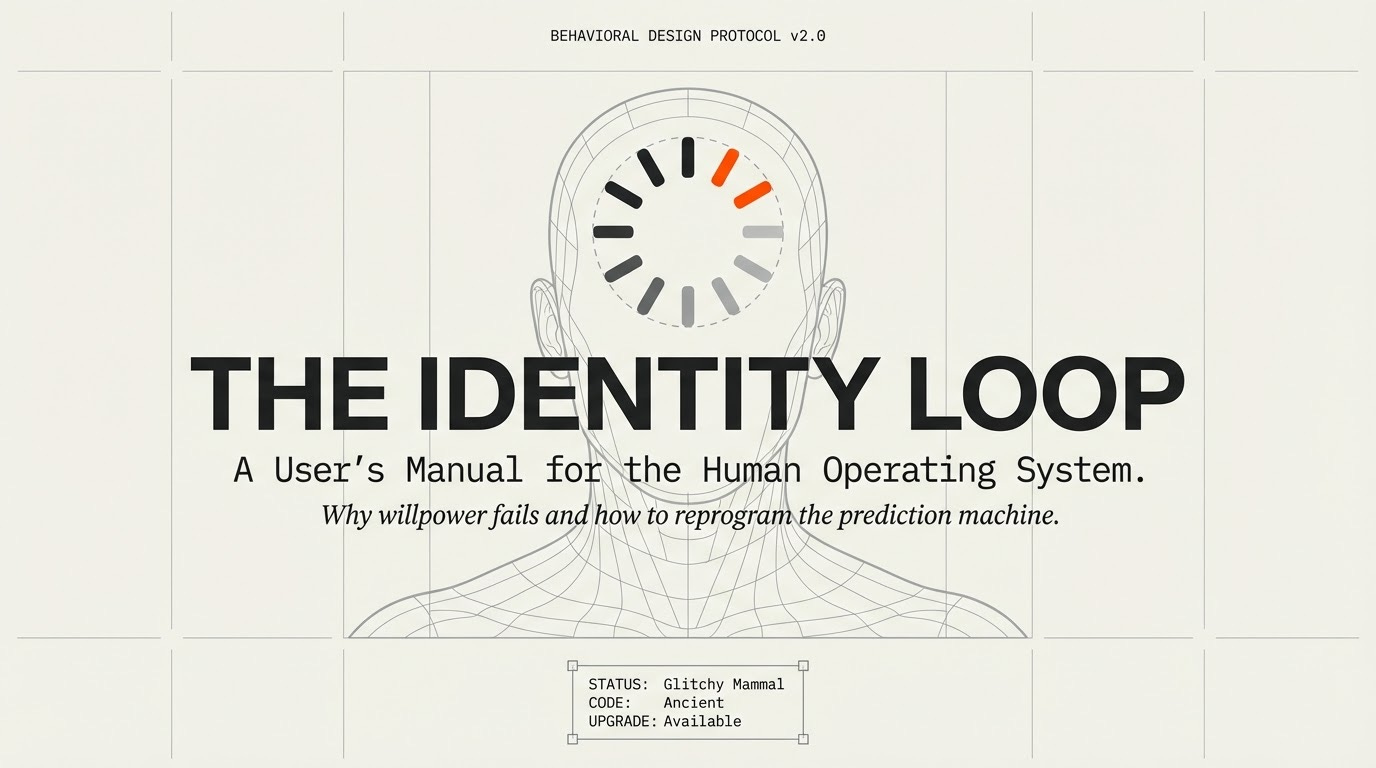
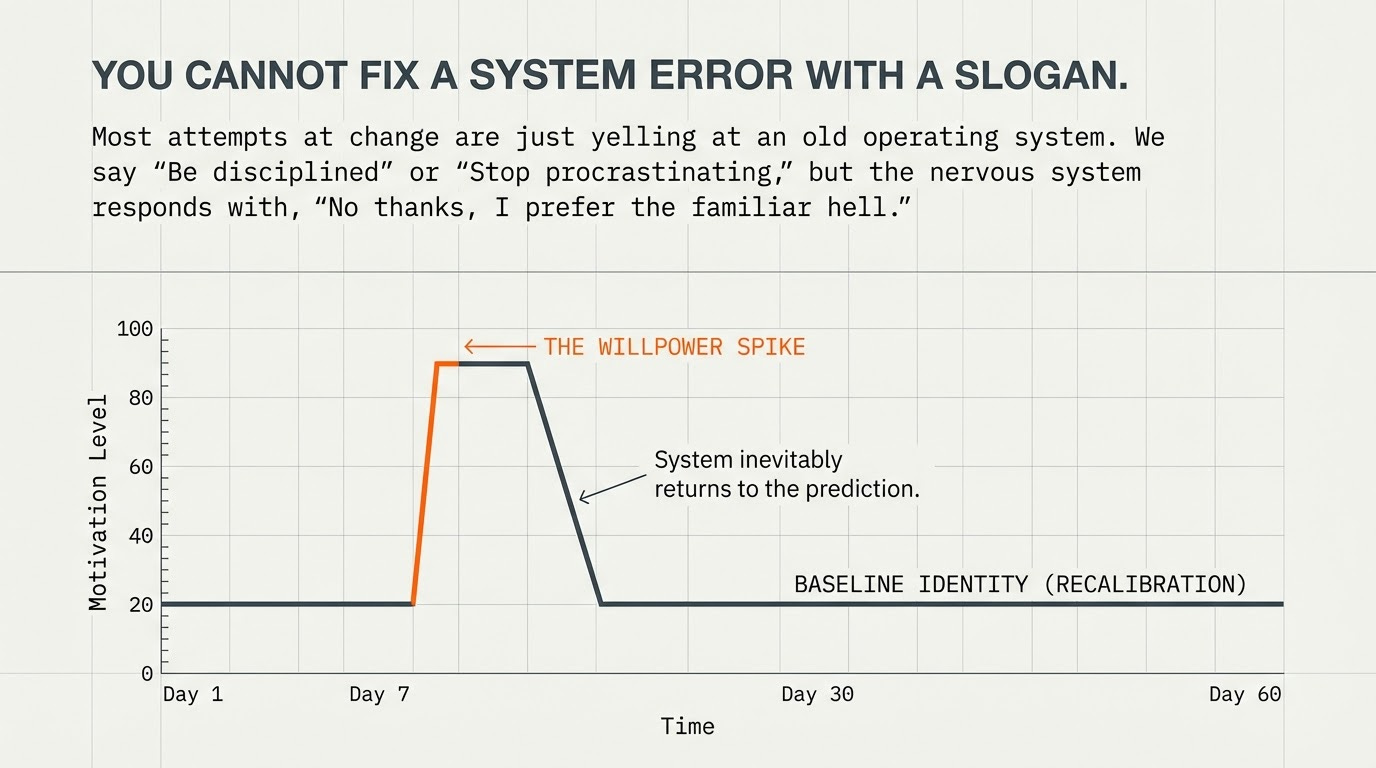
Most people try to change their life by yelling new slogans at an old operating system.
“Be disciplined.”
“Be confident.”
“Stop procrastinating.”
“Start the habit.”
Then they act shocked when their nervous system responds like, “No thanks, I prefer the familiar hell.”
Here’s the part people miss: identity isn’t something you “have.” It’s a story your brain keeps believing because you keep providing the same evidence.
One of my influences, Timothy D. Wilson’s blunt version is basically: pay less attention to your beliefs and more to your behavior. “The most important thing in your life is your behavior. It predicts everything else.”
And when your story is sabotaging you, Wilson’s point isn’t “think better.” It’s “edit the story.” His work on “story editing” is about “redirecting the stories we tell about ourselves and the world around us … in ways that lead to lasting change.”
How to build evidence on purpose.
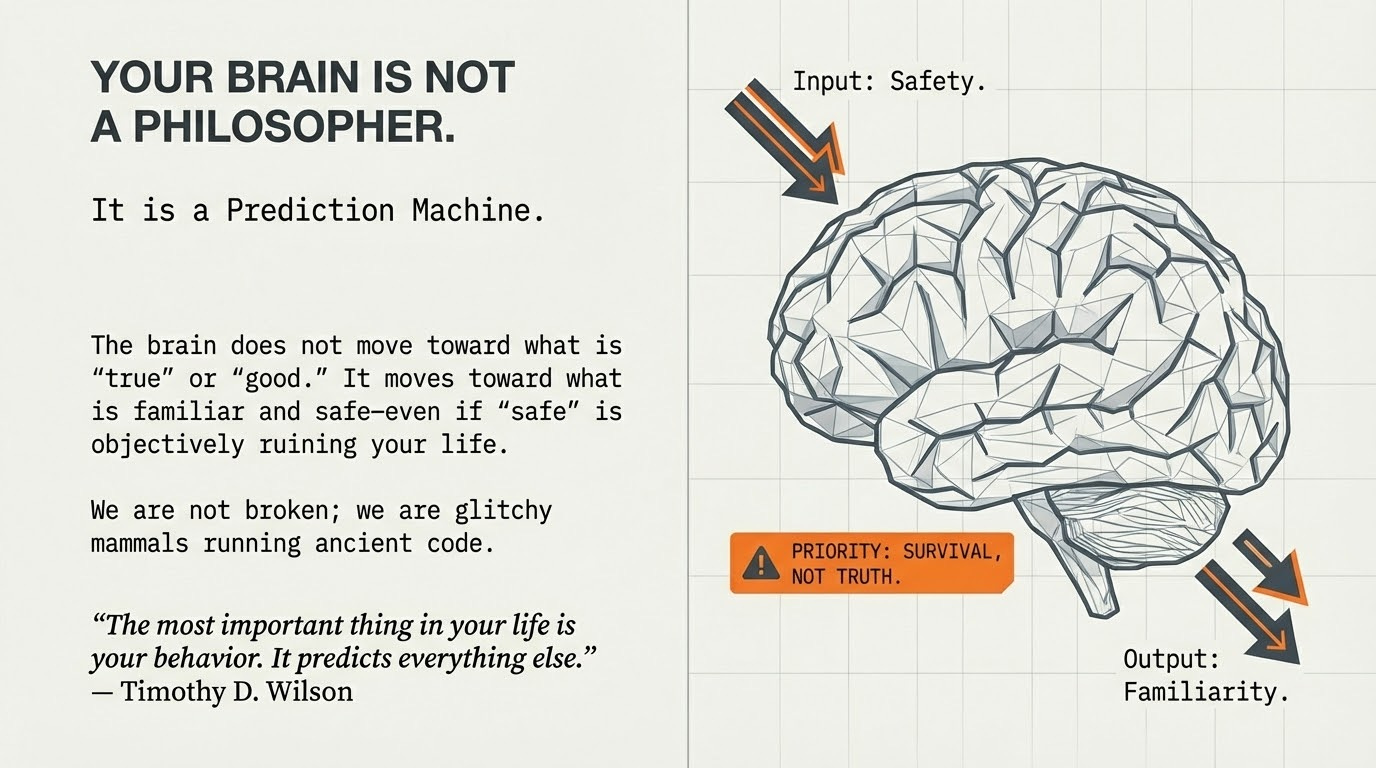
Your brain is not a philosophy student. It’s a prediction machine. It does not move toward what’s “true” or “good.” It moves toward what’s familiar and what feels safe. Even when “safe” is objectively ruining your life.
So if you want real change, you’re not negotiating with your calendar.
You’re negotiating with your identity.
And identity isn’t a vibe. It’s a loop.
Prediction → feeling → behavior → evidence → reinforced prediction.
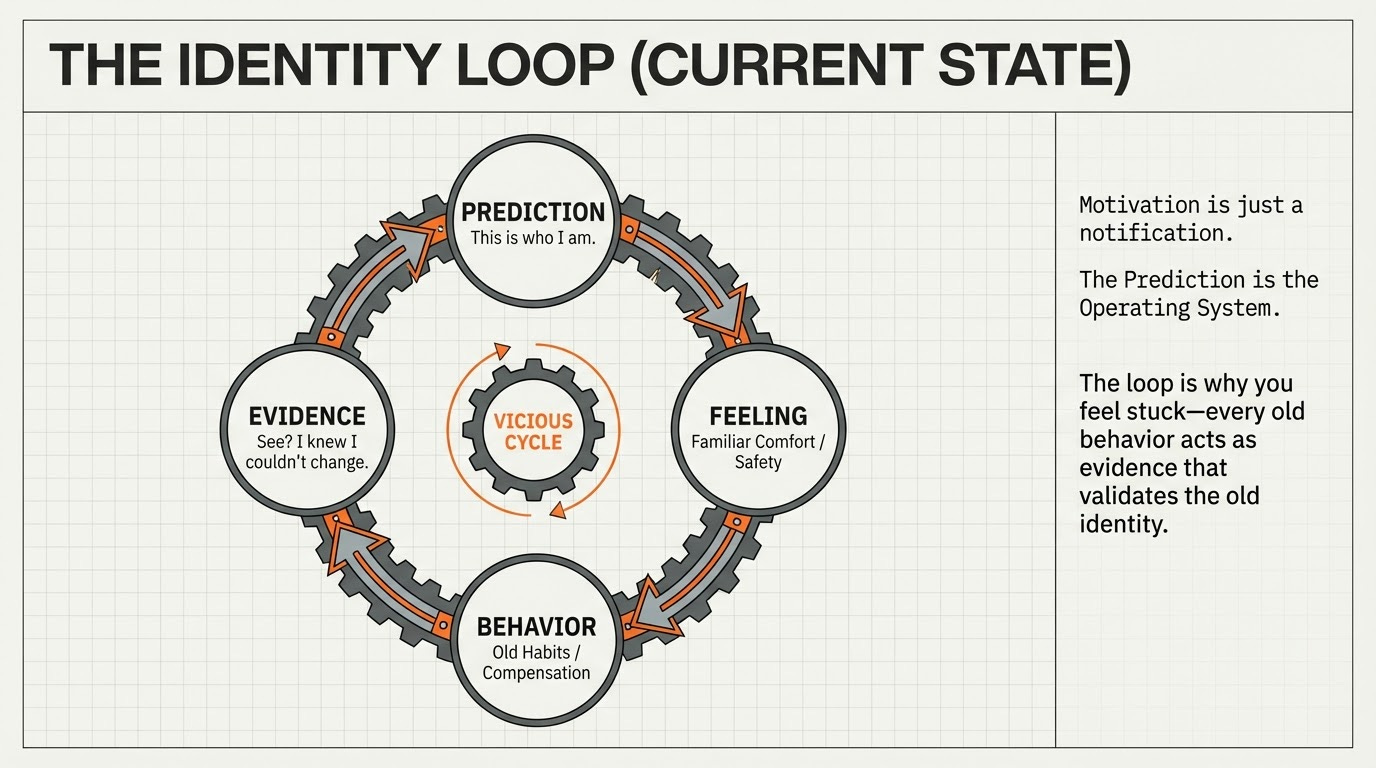
That loop is why “trying harder” works for about three days. You get a tiny dopamine spike, you feel motivated, you do the thing, and then the system recalibrates back to baseline because the deeper prediction hasn’t changed.
The prediction is the operating system.
Motivation is just a notification.
If you want to actually change, you need a system that hits the body, the environment, and the identity loop at the same time.
Not because you’re broken.
Because you’re human, and humans are glitchy mammals running ancient code.
Start here:
Your nervous system state sets your available behavior.
Depleted system → low bandwidth → impulsive choices → shame → more depletion.
Regulated system → higher bandwidth → intentional choices → evidence of competence → more regulation.
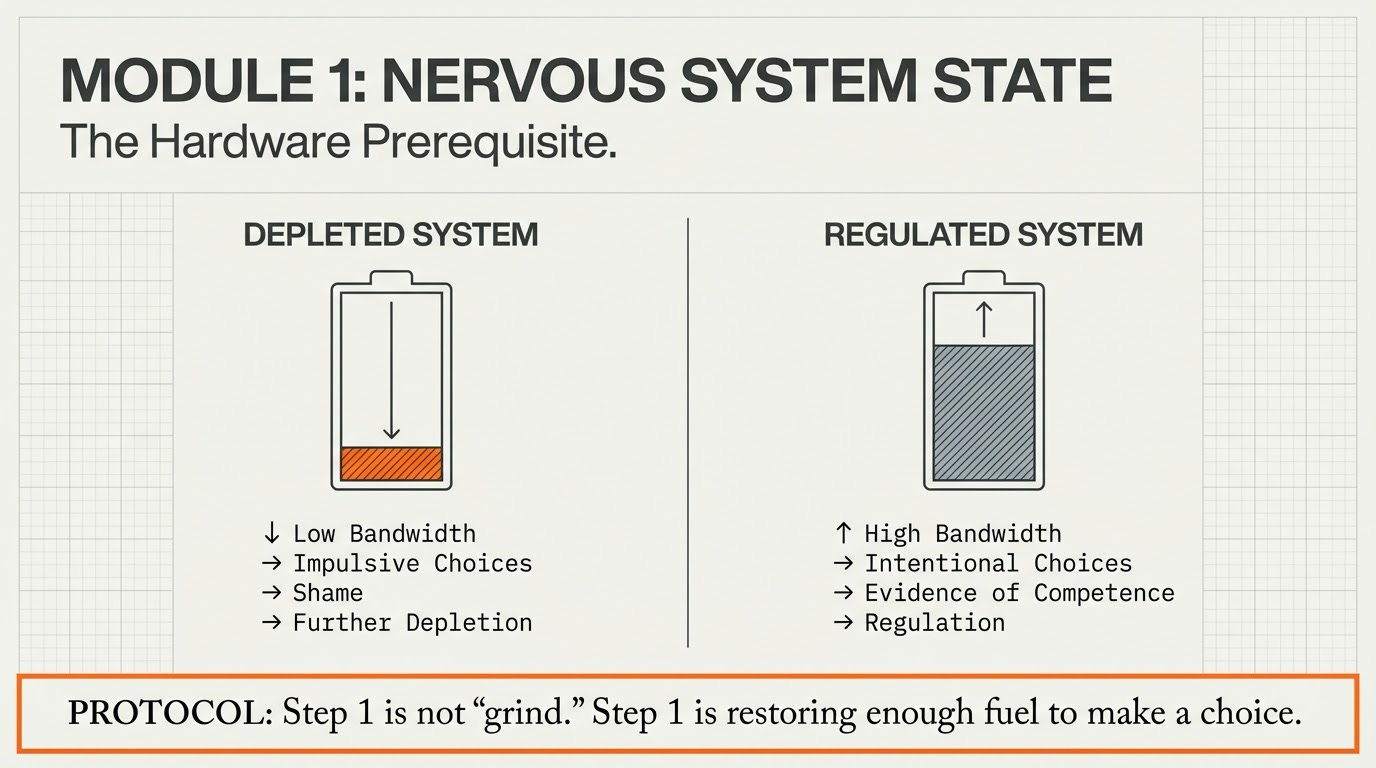
So Step 1 is not “grind.”
Step 1 is restore enough fuel that you can make a real choice.
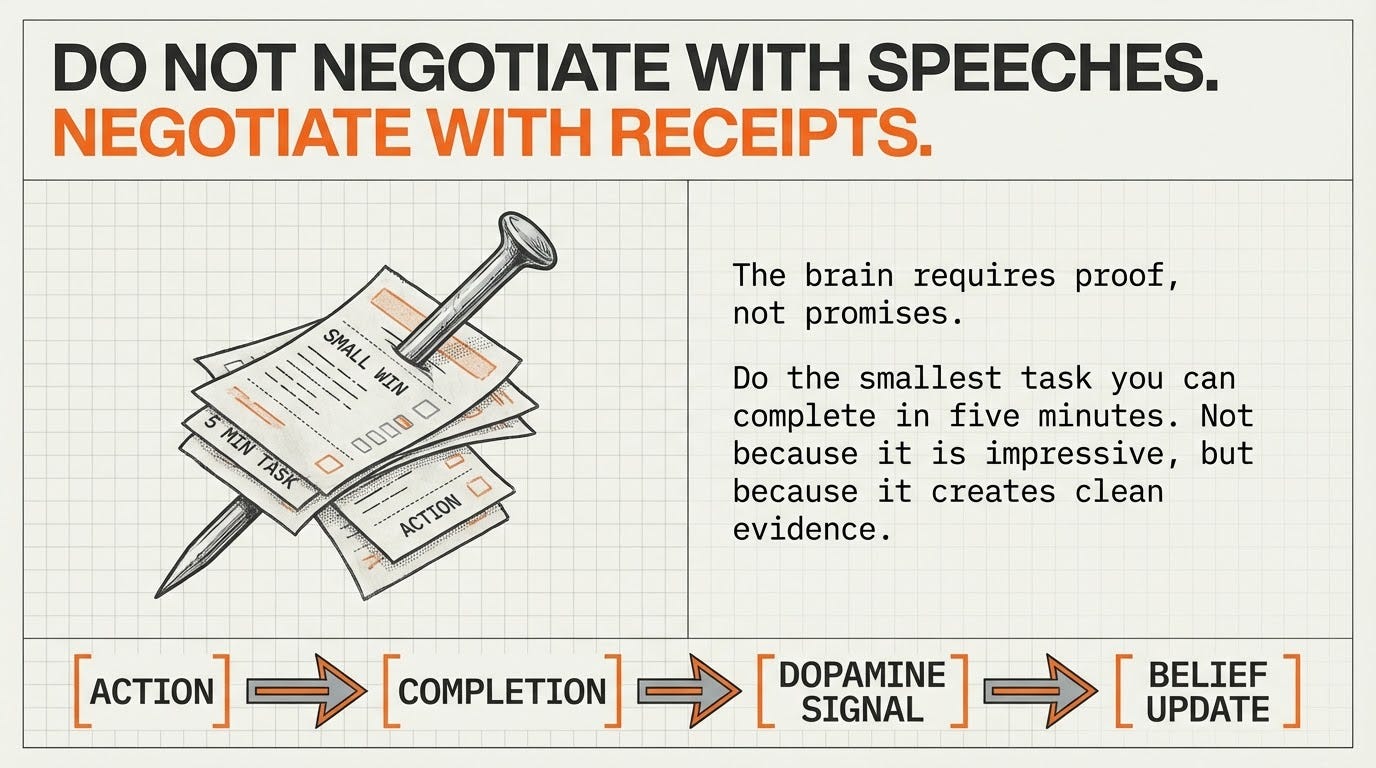
Do the smallest “guaranteed win” task you can complete in five minutes.
Not because it’s impressive.
Because it creates clean evidence.
Action → completion → dopamine signal → “I follow through” becomes slightly more believable.
Then repeat.
Small win → slightly different self-image → slightly different next action.
This is how people rebuild trust with themselves. Not with speeches. With receipts.
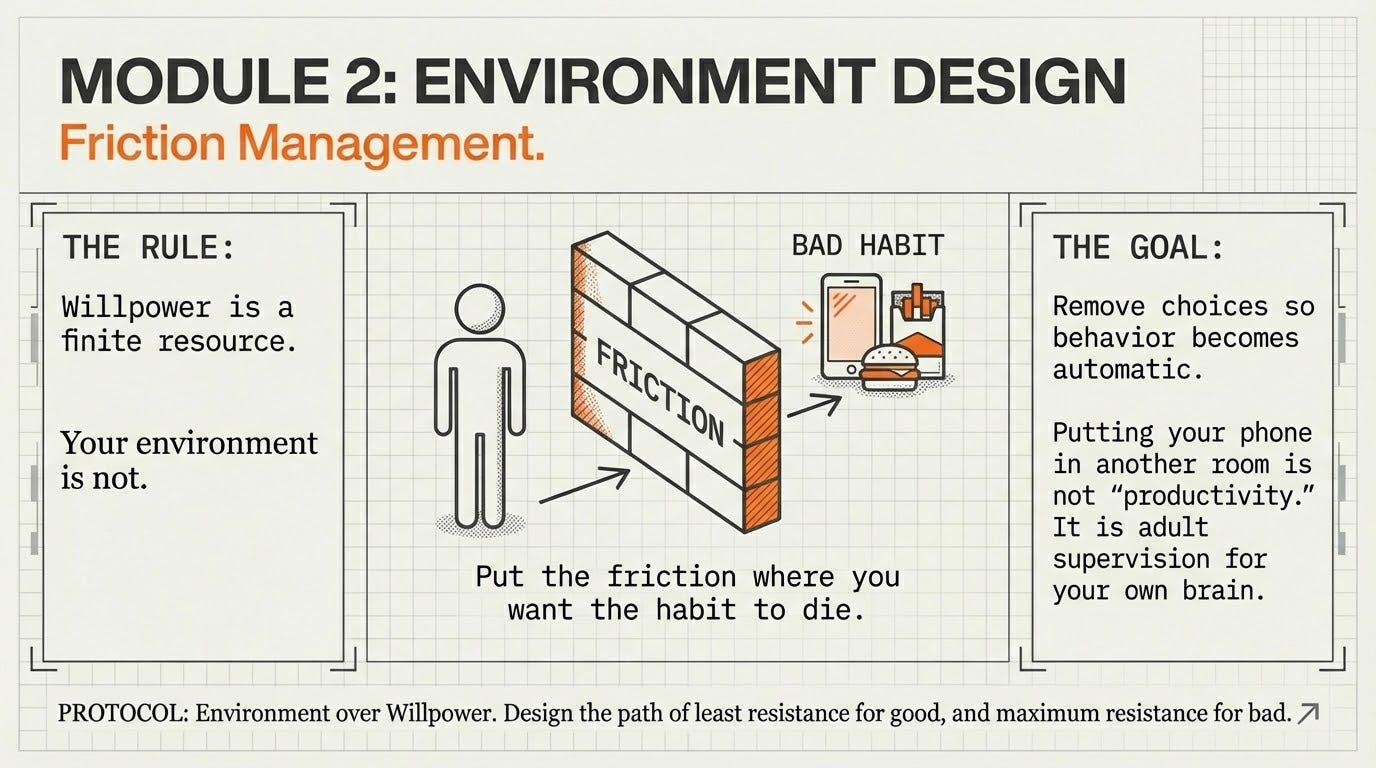
Now Step 2: stop relying on willpower like it’s a moral virtue.
Willpower is a finite resource. Your environment is not.
So you design the environment to reduce decision load.
Remove choices → reduce friction → behavior becomes automatic.
Make the good behavior easier than the bad behavior.
Put the friction where you want the habit to die.
Your phone in another room at night is not “productivity.” It’s just adult supervision for your own brain. One of my clietns has a lock box for his phone!
Now Step 3: treat identity like a role you can step into, not a personality you have to “earn.”
People wait to feel confident before acting confident.
That’s backwards.
Acting comes first. Feelings follow.
Role → behavior → evidence → identity update.
This is the “you are what you do” principle in its non-cringey form: behavior first → identity second. Or as Wilson puts it, your behavior “predicts everything else.”
Pick a role that solves your current problem (I’ll have more to say about the avatar and th self in later articles)
If you freeze when things get hard, you don’t need “more motivation.”
You need a role that does hard things without negotiating.
Call it “The Firefighter.”
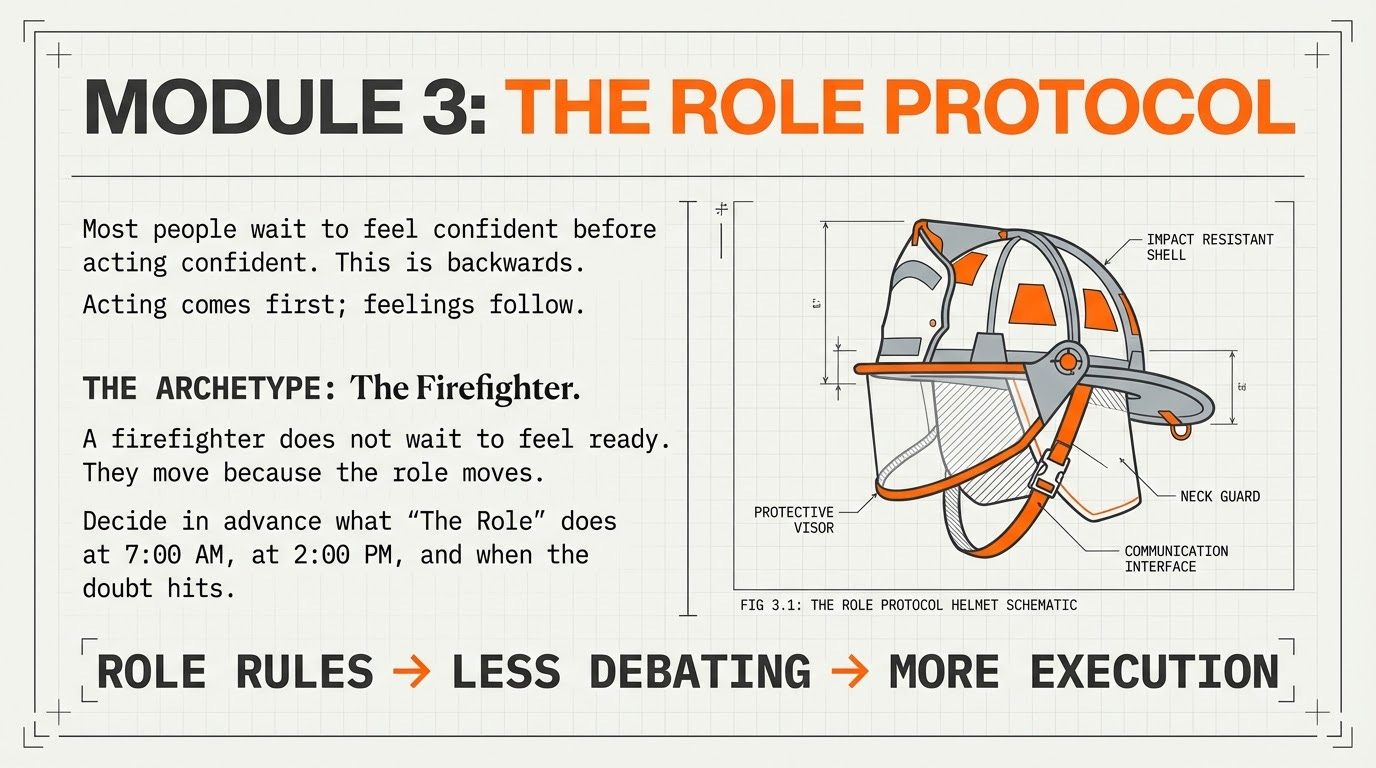
Firefighters don’t wait to feel ready. They move because the role moves.
So you decide, in advance, what the role does at 7:00 AM, at 2:00 PM, when the urge hits, when the doubt hits, when you want to quit.
This is intentional structure.
Role rules → less debating → more execution.
Then Step 4: make the future real enough that your body cares.
Most people have goals that are technically true but emotionally weightless.
“I want to be healthier.”
“I want to be more successful.”
“I want to be consistent.”
Your nervous system hears that and goes back to TikTok.
You need contrast.
Future you, if you change → what does life look like in detail?
Future you, if you don’t → what does life look like in detail?
Dream → pulls you forward.
Nightmare → pushes you away.
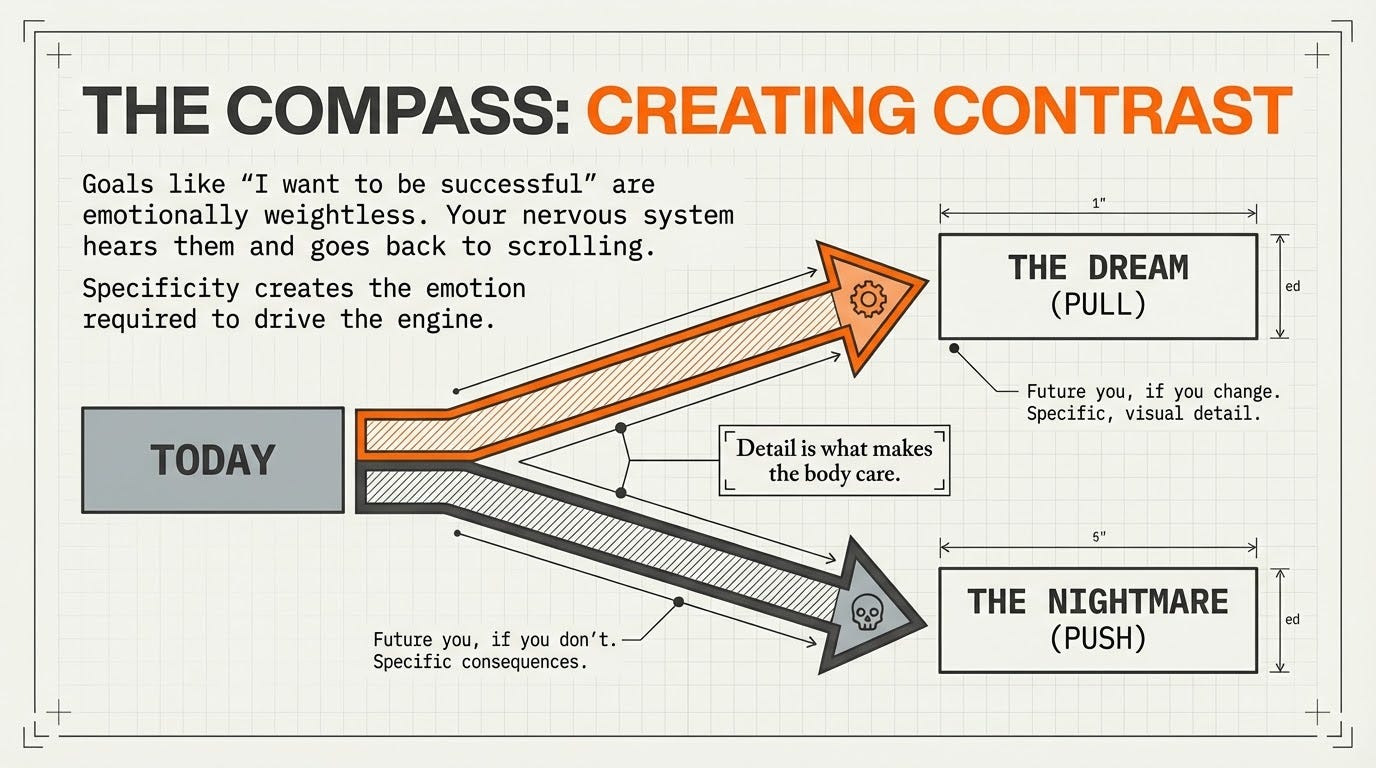
Not in a dramatic way. In a specific way.
Because specificity creates emotion.
And emotion is the engine of repetition.
Which brings us to the core mechanic.
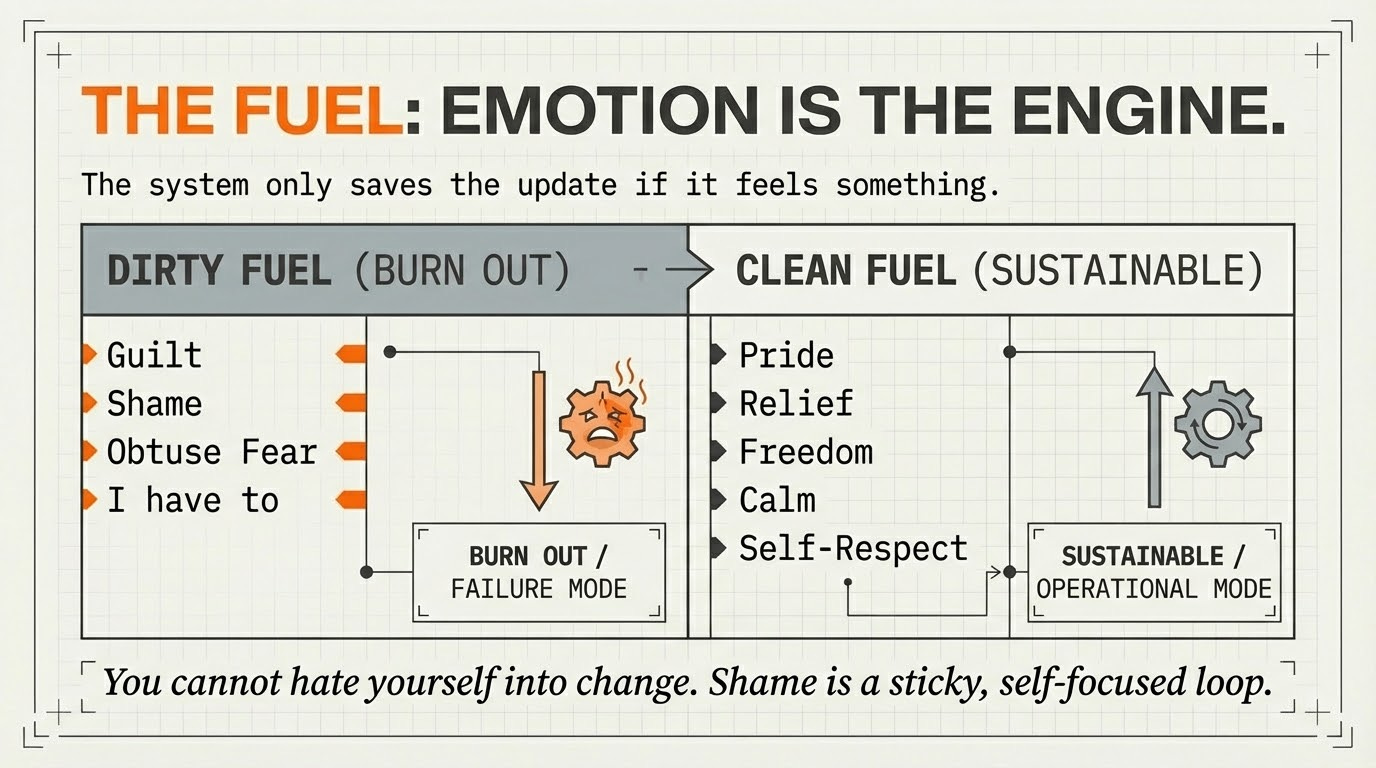
Change requires repetition under emotion.
Not repetition under guilt.
Not repetition under shame.
Emotion that is clean and directional.
Pride.
Relief.
Freedom.
Calm.
Self-respect.
The point is to pair the new behavior with an internal reward your body actually registers.
Now here’s the part people hate.
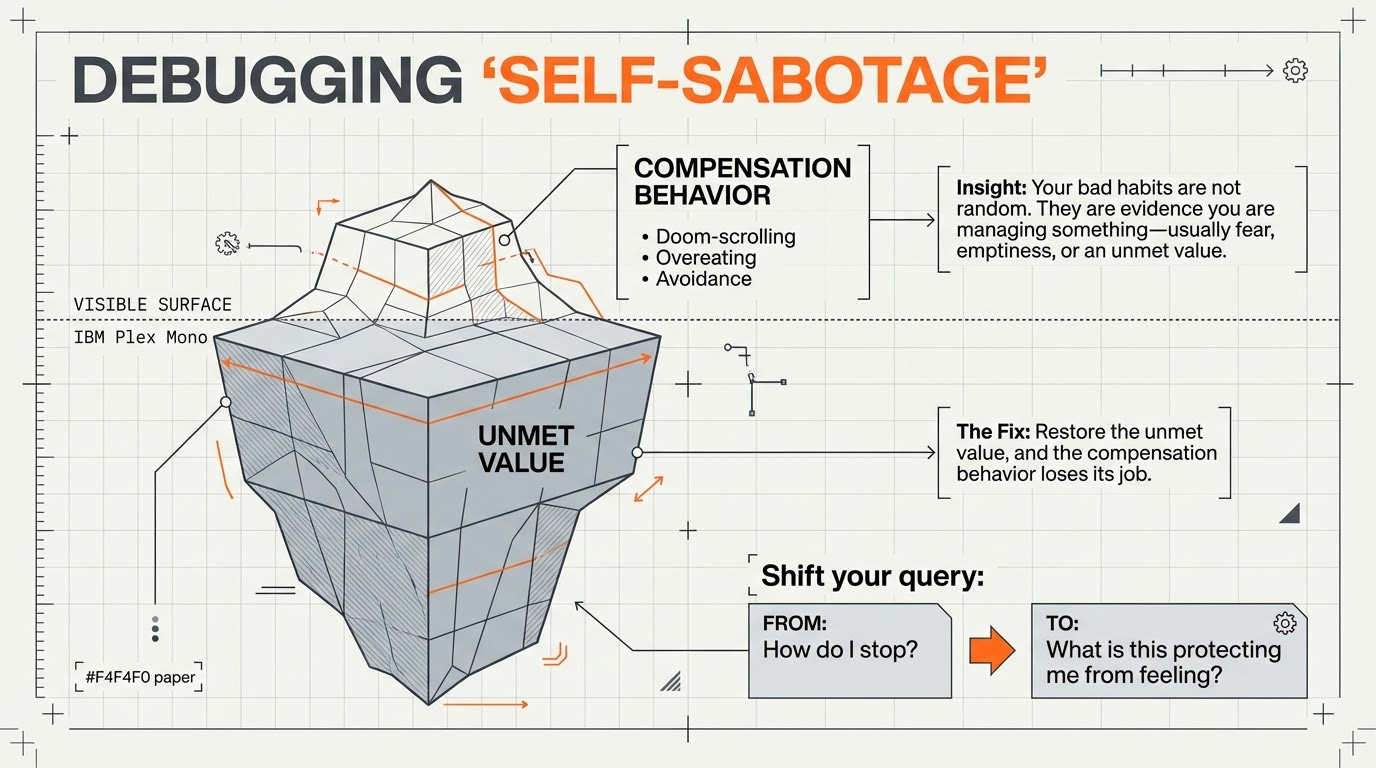
Your current habits are not random. They’re compensation.
Compulsion → short-term relief → long-term cost.
Doom-scrolling, overeating, porn, overworking, picking fights, avoiding calls, staying “busy” so you never have to feel anything.
These are not evidence you’re defective.
They’re evidence you’re managing something.
Usually fear, emptiness, or an identity that doesn’t feel worth protecting.
So the question isn’t “How do I stop?”
The question is “What is this protecting me from feeling, and what value is being starved underneath it?”
Unmet value → compensation behavior.
Restore the value → compensation loses its job.
A lot of self-sabotage fades when life is actually organized around something you respect.
Last piece: you cannot hate yourself into change.
Shame is a self-focused loop. It’s sticky.
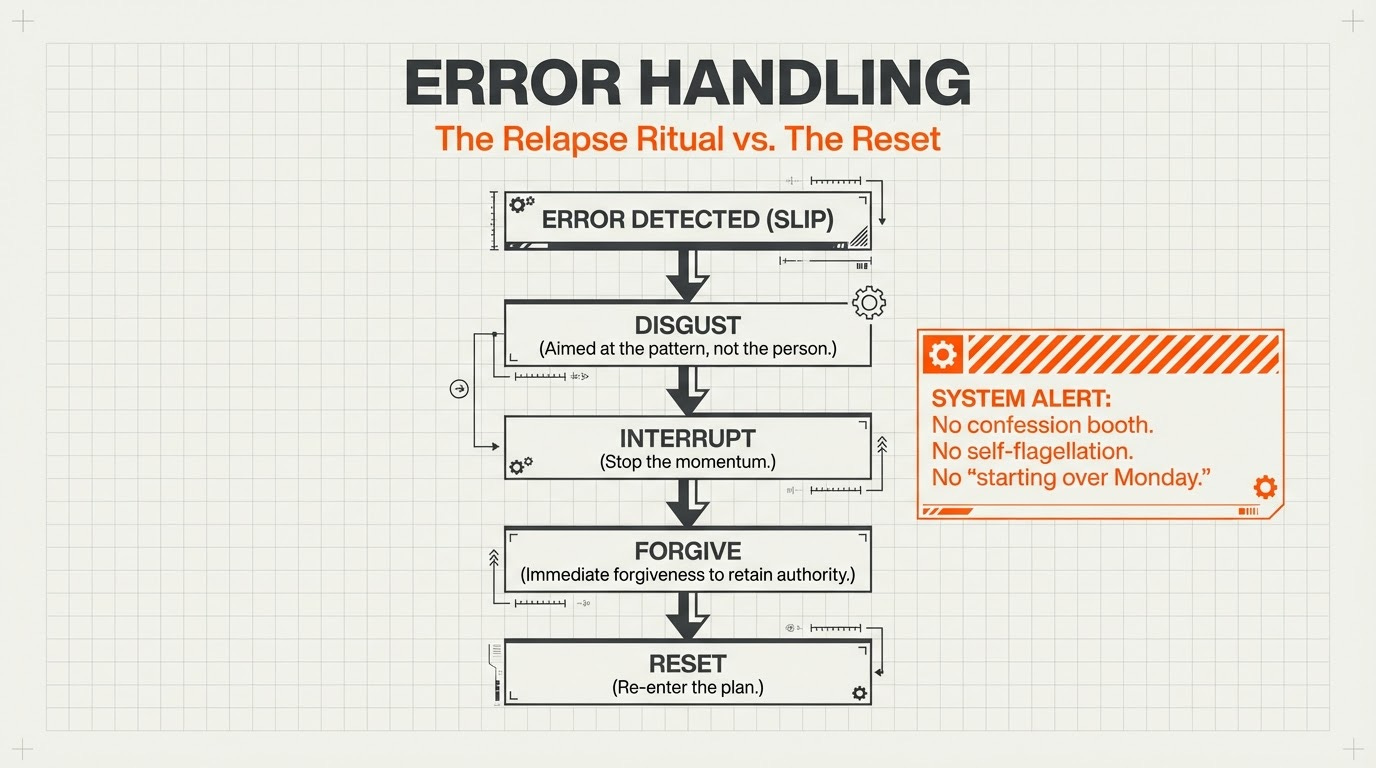
A cleaner lever is disgust, but aimed at the behavior pattern, not your identity.
Disgust → aversion → interruption.
Then immediate self-forgiveness, so you keep your authority.
Interrupt → forgive → reset → re-enter the plan.
Because the fastest way to fail is to make one slip mean “this is who I am.”
That’s not self-awareness. That’s a relapse ritual.
So here’s the system in one chain, because humans love pretending they don’t need structure:
State → available choices → environment design → role execution → repetition under emotion → identity update → new baseline.
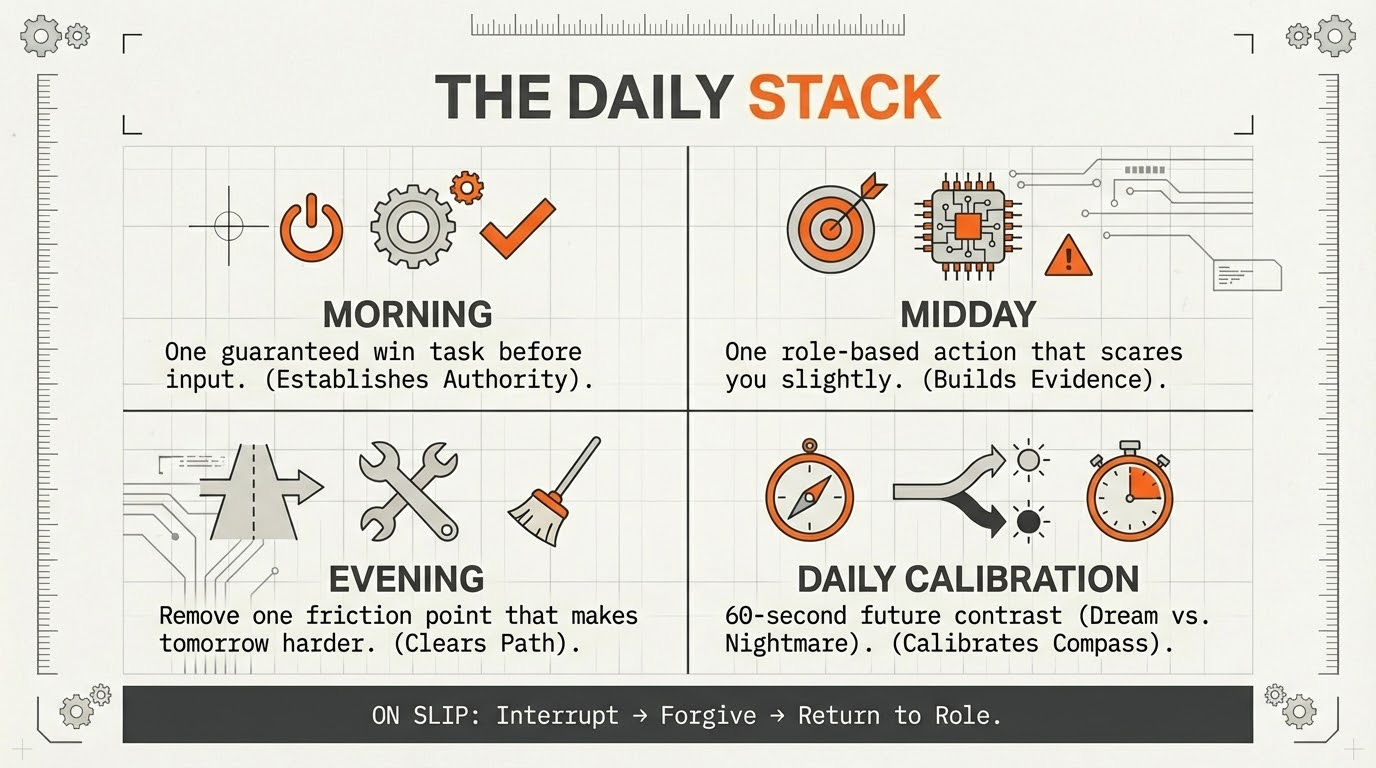
If you want a practical daily protocol, it’s this:
Morning → one guaranteed win task before input.
Midday → one role-based action that scares you slightly.
Evening → remove one friction point that makes tomorrow harder.
Daily → a 60-second future contrast (dream vs nightmare) so your body stays invested.
When you slip → interrupt → forgive → return to the role.
No confession booth. No self-flagellation. No “starting over Monday.”
That’s the whole thing.
Change is not a personality trait.
It’s a designed loop. focus on what that future you feels. now be that person, one small step at time with intention.
Your brain will absolutely cooperate once it believes the new loop is familiar, rewarding, and safe enough to repeat.