
In the autumn of 1520, Ferdinand Magellan sailed into waters no European had mapped. His fleet—five ships, fewer than 300 men—had been battered by almost a year at sea. Supplies were low. Scurvy gnawed at the crew.
Their course had taken them down the eastern coast of South America, past coastlines charted only in fragments. They were searching for a passage to the Spice Islands, a hidden waterway that would link the Atlantic and Pacific. For centuries, it had existed only in speculation and sketches.
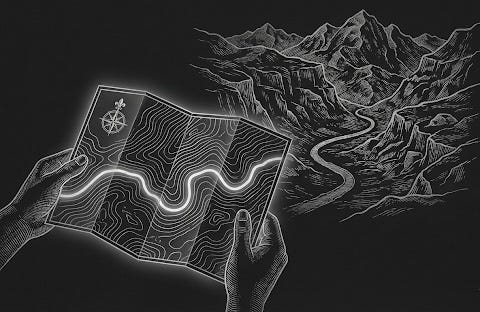
The maps Magellan carried promised the strait would be a narrow channel, a swift cut between two oceans. It was the great shortcut—an elegant, decisive line across the edge of the known world.
But as his ships approached the mouth of the strait, reality revealed itself.
The “channel” was not a simple waterway. It was a labyrinth nearly 350 miles long. Dozens of twisting passages split and rejoined like the branches of a river delta. The winds screamed through narrow corridors. Unseen currents dragged ships sideways into rocky cliffs. The water was littered with hidden shoals that could tear open a hull in seconds.
Days turned into weeks.
Magellan’s men fought against storms that came without warning. Freezing spray glazed the decks. Sails tore. Rigging snapped.
Hunger set in. Rations were cut. Morale collapsed.
Rumors of mutiny spread, and then the mutiny came. Three of the five captains defied Magellan’s orders. One ship fled back to Spain. Another was seized and its captain executed as an example.
Those who stayed pushed deeper into the maze. The strait seemed endless—each turn revealing another channel, another uncertainty.
Magellan pressed forward. Not because the map was right, but because he began to stop trusting it. He learned to read the wind, the tides, the rock formations along the shore. He navigated by what was actually there.
After 38 days, his battered fleet emerged into the Pacific. They had survived—not because the map had guided them, but because they had learned that The Map is Not the Territory.
This idea-that our internal representations of the world around us is baked into the nature of being human. It may sound radical and you may be skeptical. But this is a radical acceptance that can change your life and relationships.
I’m going to ask you to stay open to the idea. I’m not going to ask you to give up your lived experiences. You can hold those as yours. What I am going to ask you is to radically accept that this acceptance is the way forward through suffering. While suffering is an inevitable part of life, its experiential degree is magnified if you deny this reality, that the map you hold is not the territory.
In 1931, Alfred Korzybski stood before a small audience in New York City, delivering a lecture that most of them would forget—except for one sentence.
Korzybski wasn’t a sailor like Magellan. He wasn’t an explorer in the geographic sense. But he had crossed dangerous waters of a different kind—wars, collapsing empires, and the chaotic frontiers of science.
Born in Warsaw in 1879, Korzybski had been trained in engineering and mathematics. He served as an intelligence officer in the Russian army during World War I. He watched armies collapse under the weight of flawed assumptions—plans written in headquarters that had little to do with the chaos on the ground.
After the war, he emigrated to the United States. He was fascinated—and disturbed—by the way humans made meaning. He saw how people clung to ideas, systems, and beliefs as if they were absolute. He had seen leaders destroy nations because they mistook their own conceptual “maps” for the complex reality they governed.
Korzybski began to study language, psychology, and philosophy with the same precision he once brought to engineering. He saw a pattern: the human mind creates models of reality—mental “maps”—and then forgets they are models.
In his lectures, he pushed audiences to question this instinct. He explained how we use language, categories, and beliefs to simplify the overwhelming complexity of the world. But simplification comes at a cost: every map leaves things out. Every map distorts.
That evening in 1931, he said it plainly: “The map is not the territory.”
A geographical map is not the land it represents. A belief is not reality itself. A theory is not the world.
Maps are useful. They help us navigate. But when we confuse them with the territory, we stop seeing what is actually in front of us. And sooner or later, we run into the parts the map leaves out.
Humans are not naturally built to separate the map from the territory. The brain evolved to survive, not to see truth. It is addicted to certainty-the feeling of safety.
From the moment you wake up, your mind is scanning for patterns. Certainty feels safe because in evolutionary terms, it was. A brain that recognized a rustle in the grass as a snake—even when it was just wind—was more likely to survive than a brain that stopped to verify.
The amygdala reacts first, triggering your nervous system before thought has even formed. The prefrontal cortex—the reasoning brain—comes in after, often justifying what the amygdala already decided.
The Default Mode Network fills in gaps, creating a story that feels complete. The hippocampus reshapes memory each time you recall it.
This is why your map feels real: it has been assembled by the same system designed to keep you alive.
But it’s not reality. It’s only your version of reality.
Both your present and your past is a mirage of interpreted memory, distorted by need, colored by emotion, and mistaken for truth.
Psychologist Elizabeth Loftus demonstrated how fragile memory is. In her famous car crash experiment, she showed two groups of people the same video of an accident.
One group was asked how fast the cars were going when they “hit” each other.
The other group was asked how fast the cars were going when they “smashed” into each other.
Those who heard “smashed” reported higher speeds. Many even remembered broken glass that wasn’t there.
One word on the map changed their perception of the territory.
In 1993, researchers studied how memory distorts experience in real time. Participants submerged a hand in painfully cold water for 60 seconds. Later, they repeated the test, but this time the 60 seconds was followed by 30 seconds in slightly warmer water.
The second trial was objectively longer and contained more total discomfort. But when asked which trial they’d repeat, participants chose the longer one. Their memory of the experience was shaped not by the full event, but by how it ended.
The brain edits the map to make the territory feel more manageable.
Even the physical structure of the brain shows this bias. The hippocampus rewrites memories every time they are recalled. The amygdala amplifies emotionally charged moments, while less emotional details fade. The hypothalamus keeps your body in a state of readiness, influencing perception so that anything resembling past threat is treated as danger—even when it isn’t.
We don’t see reality as it is. We see reality as we are primed to see it.
The map is not the territory.
Magellan learned it in a strait that nearly destroyed him.
Korzybski learned it from the wreckage of nations and the failures of ideology.
Neuroscience shows it happening in every brain, every day.
Your map feels like reality not because it is accurate, but because your brain evolved to trust its own representation of the world.
This addiction to certainty runs deep. It shapes how you see your life, your partner, your colleagues and career. It sets you on an inevitable path for conflict. It convinces you the other person’s map is wrong because it does not match yours.
But both maps are woefully incomplete.
But this is exactly what we do in relationships.
We start with assumptions.
Stories.
Belief systems.
And when those fail, the only ones who make it through are the ones who learn to stop navigating by assumption and start responding to what’s actually there.
To seek a diversity of perceptions. And openness to uncertainty.
It’s going to take courage.
If you retreat to this false sense of security and the feeling of certainty it offers, you will fail.
Your success in love. Your success in life. Your success in your career. Your success in all relationships depends on your reaction to this conception.
If you cling to certainty…
If you cling to control…
If you cling to your map…
True intimacy will escape you.
You will mistake uniformity and sameness as love.
You may be comforted by commonalities and yet robbed of curiosity.
You will have the appearance of connection, but it will be temporary.
The world will become smaller.
Biases and judgments will grow larger.
Suffering will increase.
Eventually this illusion will crack and you’ll find yourself shipwrecked.
However, if you can embrace this principle—if you can accept that the map is not the territory—your life can change.
Your relationships can change.
Your career can change.
The way you think, talk, and communicate will change.
You will become an explorer.
Wonder will entice you.
Curiosity will fuel you.
You will be able to see and be seen for who you truly are—and who you are still becoming.
